
“Remove Intoxicated Drivers” – National Headquarters
The Nation’s longest serving Anti-DWI National Organization in the United States, founded in 1978 by Doris Aiken.
Doris began the battle against drunken driving when she learned of the deaths of Karen (17) and Timothy (19) Morris, who were killed by an intoxicated 22-year-old driver in Scotia, NY on December 4, 1977. They were the Morris’s only children. When Doris Aiken called the Schenectady County District Attorney on the family’s behalf, she was told to mind her own business. That phone call inspired Aiken to form RID, the first organization in America dedicated to fight drunken driving.
In 1982, RID led that passage of 8 bills that prohibited plea bargaining out of alcohol offense. New York was the first to pass such laws. Many other states soon followed suit. In 1984, RID supported U.S. Surgeon General C. Everett Koop’s recommendation to lower the BAC level. Decades later science has proven Everette was correct. Lowered the BAC has become the focal point of RID’s work. RID relies on volunteer citizen activists to promote legislation that saves lives. .
During the Covid shutdown, RID decided our administrators would no longer draw a salary. So 100% of RID’s income goes toward the costs of our newsletter production, the operational expenses of our website and our postal fees. Funds raised by RID Chapters are used solely for programs in their local communities. RID-USA does not receive any funding from the Alcohol Industry.
RID needs your support to continue the mission Doris Aiken started to save lives by making our roads safer. So please consider making a donation. Thank you! We have to do this important work together.

 RID has Paypal for your convenience just click on the Donation button. Or you can send a check to PO Box 520, Schenectady, NY 12301.
Shout out to Maureen McCormick 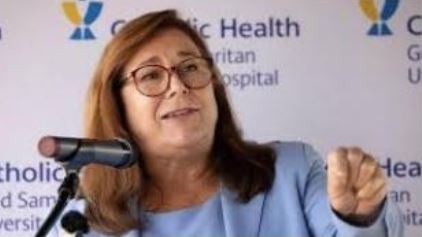
Maureen McCormick, ADA Suffolk County
Several years ago, I joined Suffolk County ADA, Maureen McCormick’s email chain. Since then I’ve received a steady flow of announcements regarding her efforts and events in the New York State Legislator. She has worked tirelessly in building a powerful and diverse coalition of advocates who are aligned in fighting to improve road safety in New York State.
McCormick’s bill, the “Deadly Driving Bill” (S.5457/ A.3981), seek to make New York’s drugged driving laws applicable to all dangerously impaired drivers; not just those impaired by drugs on a statutory list. The bill would close loopholes in the laws that currently allow for defense attorneys get their clients off from being held accountable. She has done an exemplary job of educating the public on the problems with our current system as well as illustrating how her bill would correct those flaws.
As most of you know I have been trying to pass a New York State bill (S.53/A.1232) to lower the BAC since 2013. At times, the lack of progress has been extremely frustrating. So I’m in awe of McCormick’s resilience and perserverance. She hasn’t been deterred by the stiff resistance. Passing effective, common sense life saving laws should be a no brainer. That this decades old struggle continues is a reflection of the power and influence of the lobbying interests of defense lawyers and the alcohol industry.
The opposition uses emotional arguments, not scientific studies. They’ve been successful in thwarting legislation that would save lives. McCormick has been instrumental in countering that narrative. She testified at transportation committees to establish an official record of the flaws in our legal system, which defense lawyers profit from at the expense of citizen safety.
I am confident that McCormick’s’ dedicated efforts and gumption will win out in the end. Anyone would get discouraged and throw in the towel. That she remains committed to making the roads we share safer is a testament to her valiant service to the community.
Thank you, Maureen!
I sat down with WAMC’s David Guistina for an interview on his show, Capital Connections.
I detail the history of RID as well as the saving life benefits of NYS’s .05 bill.
The Capitol Connection – William Aiken, President of RID, Remove Intoxicated Drivers
NBC Interview: .05 sends a message before the driver gets behind the wheel.
CBS Interview: The Current DWI Laws Have Failed Us. They Are Unacceptable!
RID Honors Heroic Officer
Remove Intoxicated Drivers issued an award to Officer Morgan Smith of the Sidney police department for her amazing story of recovery, perseverance and collaring the drunken driver. I want to give a heartfelt shout out to Rene Barchitta for making this event possible. Upon hearing Officer Smith’s story, Rene urged me to honor her fortitude and bravery. RID is grateful to pay tribute to the outstanding merit of law enforcement officers, like Morgan Smith. Now more than ever, the public needs to support law enforcement.
William Aiken,
President, Remove Intoxicated Drivers
.05% BAC Law Featured on CBS 6 Albany
“Once again legislation has been proposed to lower the BAC limit from .08 to .05, and on Friday, the New York State Assembly Transportation Committee held a hearing with experts and witnesses to discuss the legislation.
…
Families who have lost loves to drunk drivers told their stories to lawmakers, advocating for change.
“Each of the losses of the people here standing and the people of New York State and nationwide,” Alisa McMorris, whose son Andrew was killed by a drunk driver, said. “They’re brothers and fathers and children and grandparents and cousins and friends, and Andrew cannot be just another statistic.”
NHTSA: Utah’s .05% Law Shows Promise to Save Lives, Improve Road Safety
New study shows lowering impaired driving legal limit reduced fatalities with limited increase in arrests, no economic losses in 2019
February 11, 2022 | Washington, DC
The National Highway Traffic Safety Administration has found that traffic deaths in Utah decreased, and more drivers said they arranged for sober rides home, when the State lowered its impaired driving legal limit to .05%.
In a new study published today, NHTSA found Utah’s fatal crash rate dropped by 19.8% in 2019, the first year under the lower legal limit, and the fatality rate decreased by 18.3%. The fatality rate measures the number of fatalities over total vehicle miles traveled, whereas the fatal crash rate measures the number of crashes involving a fatality over total vehicle miles traveled.
In 2019, despite increased vehicle miles traveled, Utah recorded 225 fatal crashes and 248 fatalities, lower than the 259 fatal crashes and 281 fatalities in 2016, the last full year before Utah voted to lower the blood alcohol level to .05%. Utah is the first State to adopt the .05% blood alcohol concentration limit.
Utah’s drop in crash and fatality rates was a significant improvement over the rest of the United States during the post-implementation year studied, which had a 5.6% fatal crash rate reduction and a 5.9% fatality rate reduction in 2019. The neighboring States of Arizona, Colorado, and Nevada did not show the same levels of improvement in fatal crash and fatality rates as Utah.
“Utah typically has one of the lowest rates of impaired driving fatalities in the nation, but this study shows that all states have room for improvement. As our study shows, changing the law to .05% in Utah saved lives and motivated more drivers to take steps to avoid driving impaired. NHTSA conducts research on the effectiveness of countermeasures to improve safety on the nation’s roads, and this study will be a useful tool for other States considering a move to .05%,” said Dr. Steven Cliff, NHTSA’s Deputy Administrator.
In 2019, more than 22% of those who drank alcohol indicated they had changed their behaviors once the law went into effect. The most common change was ensuring a sober ride was available when drinking away from home, an encouraging sign.
NHTSA also found none of the economic impacts that had been predicted with the change from .08% to .05%. Alcohol-impaired-driving arrests did not climb sharply after the law went into effect, as some had feared. In 2016, the last full year before Utah voted to change the law, 8,828 arrests were made. Under the new law in 2019, 8,512 arrests were made. Impaired driving arrest numbers in Utah have remained fairly consistent in recent years, except for a dip in 2018.
Full report: Evaluation of Utah’s .05 BAC Per Se Law
NHTSA
Assemblywoman Simon is the new Sponsor of .05 BAC Bill in New York State

Assemblywoman Simon
District 52 Brooklyn
Since January I have been actively seeking a replacement for Asst. Speaker, Felix Ortiz, who wrote the original .05 bill in 2013. Unfortunately, the Asst. Speaker was defeated in the 2020 Democratic primary. This search was made more difficult since we were still in the middle of the pandemic and the shutdown of the Capital. So I’m happy to announce that Assemblywoman Jo Anne SImon representing Brooklyn has agreed to introduce the Assembly version of the .05 bill, AO7197, which will lower the legal BAC from .08 to .05 and lower the aggravated BAC threshold from .18 to .12.
In 2004, she was elected female District Leader and State Committeewoman for the 52nd Assembly District. The Assemblywoman was one of 15 co-sponsors of the previous .05 bill. RID is happy to have someone with her background and experience to help navigate the bill through the rigorous legislative process. I want to thank Assemblywoman Simon and her staff for stepping up in this leadership role. I’m planning a press conference at the Capital to announce the assemblywoman as sponsor of the bill. There will be road safety and victim advocates speaking about the merits of AO7197 at the event as well. I will post the date once everything has been finalized.
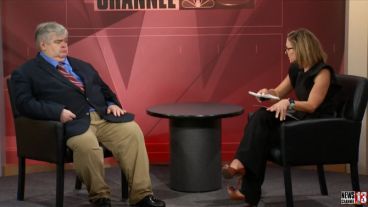
RID on NBC Channel 13 about lowering BAC
Click the image or link below to view
ABC News 10 Does Great Report Explaining the .05 Bill in NYS
Click on link below:
CBS 6 INTERVIEWS AIKEN
William Aiken, Vice President of RID explains why lowering the
legal BAC to .05 is necessary and how this bill will save lives
Al Crancer November 1933 – July 2019
It is with sorrow that we announce the passing of RID’s California Chapter head, Alfred Crancer. Al was a passionate voice for road safety, particularly combating the push for Marijuana Legalization. He was a meticulous researcher, who dug deep into the data of drunk driving to explore what policies can be implemented to save lives.
In addition to being a regular contributor to RID newsletters, Al has published numerous research articles published in various journals including Science, Journal of the American Medical Association, and the American Journal of Psychiatry and has US Patents. Following his retirement, he started Crancer and Associates, a research firm that conducted statistical research and analyses in traffic safety issues, additionally, he was well known nationally for his articles on Marijuana and its effect on drivers.
Al will be sorely missed by his family, friends and those who had the pleasure of knowing him. RIP Al.
05 SAVES LIVES
Contributions to RID-USA go towards our support of DWI victims advocacy and DUI awareness.
Aiken still passionate about the cause she started


18 to 21. (photo provided)
Faith in people
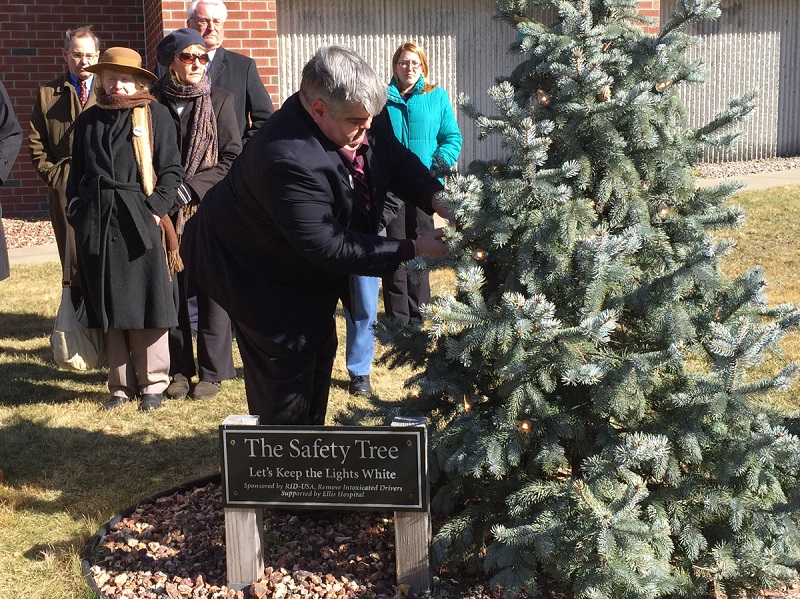
Remove Intoxicated Drivers hosted a Safety Tree Event at Ellis Hospital
Photo/ Steven Cook Daily Gazette
RID HONORS THREE VICTIMS WITH
SAFETY TREE LIGHTING CEREMONY
A brisk, cool spring day served as a backdrop to the first ceremony honoring victims with the Safety Tree Lighting Event at Ellis Hospital. In 2008, RID president, Doris Aiken conceived the idea of having a Safety Tree as a way to pay tribute to those who lost their lives to drunken drivers. RID Vice President, William Aiken, Schenectady Mayor Gary McCarthy and Schenectady District Attorney Robert Carney all spoke at the event, delivering passionate speeches on the importance of driving sober while still acknowledging the enormity of the problem.
On September 4, 2015 in Duanesburg, NY, Betty Brockhum, Vanessa Cohn and Summer Penney were returning from a back-to-school shopping trip when their vehicle was struck head on by an SUV driven by Joseph Duffy, 27 who was attempting to pass several cars ahead of him. Cohn was killed instantly, her daughter Penney died soon after while Brockhum died from her two weeks later from her injuries. A grandmother, mother and daughter representing three generations in the same family are gone today because someone refused to obey the law to driver sober.
Three red lights replaced white ones on the safety tree to symbolize the deaths of these three women. . A second Safety Tree was established in Hudson, NY where six victims who lost their lives to drunken drivers have been honored since 2011. The Hudson Safety Tree represents Columbia and Greene counties.
Alcohol Overdose facts and fatality information in DVD, “Without Warning”. Parents who have lost their teenager children to AOD. DVD on binging (Without Warning) DVD. Information on effects of high BAC and lower BAC findings. RID was formed two years prior to MADD.RID supports and advises SADD teachers and leaders in High Schools. RID supports ignition interlocks, a technical lock on car starters. Tests blood alcohol level on breath of driver. Cars won’t start if .02 BAC or higher is present. Please read our current RID Newsletter CITIZEN ACTION NETWORK REMOVE INTOXICATED DRIVERS If you are a victim of a drunk driver, here are the necessary steps you need to pursue justice. You have a right to the police report of the crash and you have a right to make a request to give a victim impact statement to the Court. If you have a police report, you may want to contact the District Attorney in the County where the crash occurred. If you don’t have a police report, you need to contact the police department in the jurisdiction where the crash occurred and request one be sent to you. If you click on the link below, then select the County in New York State where your case is being adjudicated. You will find the necessary contact information for the police department, District Attorney and the County Clerk’s office. Ask the County Clerk to inform you about any dates regarding your case. If you wish to make a victim impact statement, you should contact the County Clerk’s office. If your case is being handled outside of New York State, follow the same guidelines listed here once you have found the correct County Website. www.nysegov.com/citguide.cfm?context=citguide If you have any further questions regarding this process, contact RID at ridusa@verizon.net

Activism Then and Now
By Doris Aiken
When I started Remove Intoxicated Drivers there was no Facebook or Twitter to organize or rally the troops around. Our first meeting took place in the Unitarian Church in Schenectady. A local newspaper reporter covered the event and wrote an article the next day that featured my phone number. I was surprised by the volume of calls I received from angry victims who felt they had been denied justice.
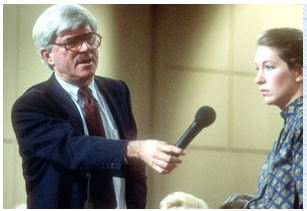
I met with Janet Bessie, an activist from Rochester and began to network with her, building contacts with victims of drunken driving. It wasn’t until I appeared on “The Phil Donohue Show, two years later that RID really took off. We grew from a few chapters in New York State to a national organization with 62 chapters in 42 States. RID succeeded in advancing the first victim impact statement in New York State for DWI cases.
Shortly after the Donahue appearance, a group of activists concerned about the negative effects of advertising alcohol banned together to form the SMART (Stop Marketing Alcohol on Radio & Television) campaign. When they ask me to join their campaign, I agreed, not realizing the repercussions of that decision.
Once the TV Broadcasters caught wind of my association with the SMART campaign, they viewed RID as a threat to their bottom line. Thus, the invitations to appear on national television began to disappear. Many of the major newspapers and magazines were heavily funded through alcohol ads. They didn’t appreciate my connection to the SMART campaign either. So RID got the cold shoulder from the print media as well.
I even did an interview with 60 Minutes that took three hours to film and it was cut out from the segment entirely. 60 minutes showed a few seconds of our volunteers participate in court watching. My choice to be part of the SMART campaign almost crippled RID. Other anti-DWI organizations that chose to take money from the alcohol industry benefited from our media blackout.
Today, RID is taking advantage of social media to get our message out to the public. We have partnered with an on-line legislative service, “Legicrawler”, which allows us to monitor and track bills concerning DWI and Alcohol policy. RID receives reports on the status of DWI bills in five states on a weekly basis or whenever there’s movement on a bill. Legicrawler helps RID to strategize with our chapter leaders about which bills to support.
Our website has news articles, opinion pieces and comments from our readers. The Website also features RID’s Citizen Action Network which instructs victims how to navigate the legal system and who they need to contact regarding how to follow up on their case. If you have a concern or need to reach me, you can contact me at ridusa@verizon.net or call our toll-free number (888) 283-5144.
I have been in this business of advocacy for 37 years. You have to adapt to the curveballs life throws at you. There have been enormous changes that have taken place in technology since we started. Luckily, I have a great staff, engaged board members as well as energetic chapter leaders that allow RID to succeed in meeting the many challenges posed by drunken driving. Your support makes it possible for RID to continue to fight the good fight.
Thank You!
Doris Aiken, President
Remove Intoxicated Drivers

The President’s Letter: Messaging Matters
By Doris Aiken
Al Crancer’s report on the public service announcement and their effectiveness in combating drunken driving confirms what I have believed for a long time; when it comes to deterring drunken driving messaging matters.
With so much at stake, our government has to pay better attention in monitoring what’s the best approach to warning young people in particular, the importance of driving sober. Peer pressure is a huge factor among youth in doing the right thing or the wrong thing. Tapping into that element should be a key focus of sending a successful message.
Mr. Crancer’s report reflects on what’s succeeded and what has failed. I shouldn’t be too critical of NHTSA (National Highway Traffic Safety Administration) since analyzing these trends can take a long time. However, now that we have clear data that the earlier messaging was far more effective, there needs to be a return to the Public Service Announcements that were more direct in connecting with young people.
I worry that the decision makers place more value on sending messages that are politically correct and put less emphasis on the track record of success. Corporations often go back to using slogans that were successful in the past. Why can’t our government take a page from the private sector’s playbook by bringing back a campaign similar to “Friends Don’t Let Friends Drive Drunk”?
Any serious effort by the Government to educate and deter young people from driving drunk should incorporate primary messaging as a central theme of the campaign. As Al Crancer points out the recent campaigns, such as, “Drive sober or get pulled over”, and “Drunk driving is buzzed driving” have shown to correlate with higher DWI rates over the years. NTHSA’s own data proves this point. So let’s encourage NTHSA to learn from its history by putting together the most effective messaging to help keep the roads we share safer for everyone.
Note: Al Crancer’s full report on effective messaging by NTHSA will appear in the RID Spring Newsletter.
LegiCrawler Service is now available through RID see link below
While we don’t advocate any specific legislation we now provide access to this link for informational purposes.
RIDs partnership with LegiCrawler allows you to have access to up to date information on Legislation in your State.
Please follow the link below , Choose your State, and then enter your search www.legicrawler.com/ridn/adm.html
Please visit our new Facebook Page where you can get the latest news and post your feedback on Remove Intoxicated Drivers. Project RID-C.A.N.(Citizen Action Network) utilizes action network. Members of RID refer victims to key officials in their locality to get involved in their own case situation. Instructions given to RID volunteers. Court watch project. Binge drinking and teenage addiction. Special effect on teen drinkers who’s brains are not fully developed. DVD (Without Warning). DWI victim advocates RID members volunteer to sit with victims in court sessions, acquaint them of their rights.